The Creative Process Field Guide
How to use your creativity at work — no matter your age, stage or industry.
This guide is for anyone who wants to feel more creative in their work. You’ll practice framing your work as a creative endeavour, orienting yourself in the creative process, and moving skilfully between its different phases — building creative confidence no matter your age, stage or industry.
Have a pen and paper handy to work through the prompts, or download the worksheet below.
Is my work creative?
Creativity is simply the act of bringing things into being. And we’re all using it, all the time — even if we don’t think we’re ‘creative’ at all. You might be creating relationships, products, experiences — or that sandwich you just had for lunch. It doesn’t matter what. Whenever you’re bringing into being something that doesn’t already exist, you are creating.
List five things you’re currently bringing into being.
The creative process: outline
Whenever you’re bringing something into being — large or small — you’re working through a creative process. I think about that process like this:
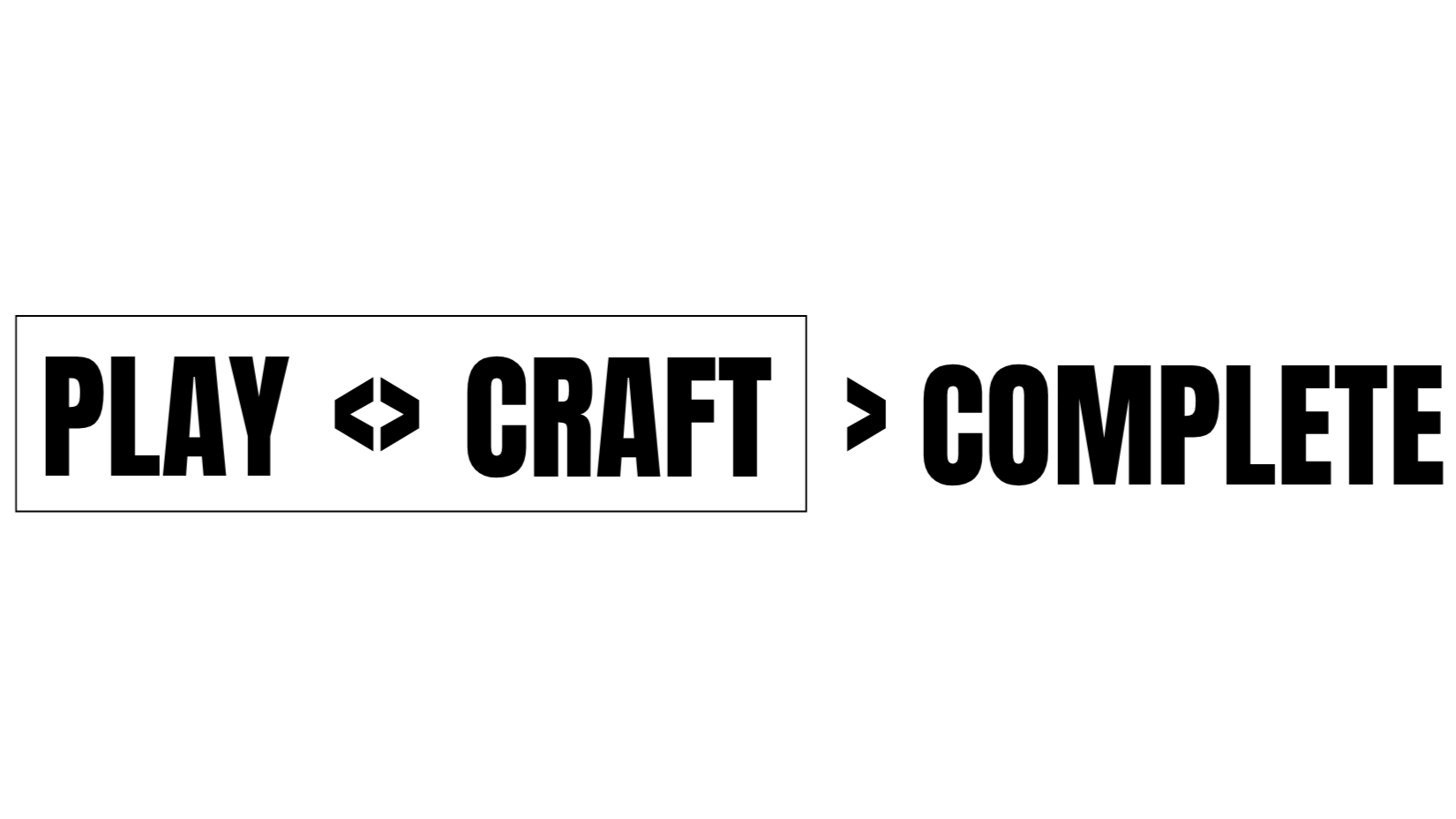
Phase 1 is Play – where you’re generating ideas. The key here is to lower the stakes. Taking the pressure off helps you tap into your imagination, open yourself up to new connections and go fishing for ideas (how the filmmaker David Lynch described it).
Phase 2 is Craft — where you’re refining your ideas. The aim here is relaxed focus and tenacity. You’re bringing your critical brain online so you can take a promising idea and work on it. Structure it, develop it and test it out.
And then you move back and forth between Play and Craft as many times as you need.
Phase 3 is Complete — where you finish your creation. You call it done and move on. That might mean releasing your creation into the world, or simply putting it aside and clocking it up to learning. Success and failure are equally valid results in the creative process.
Where do these Phases show up in your work right now? How does this model map onto other frameworks or ideas you have about your work?
Which Phase do you feel the most comfortable in? Where do you feel the least comfortable?
Working with the creative process
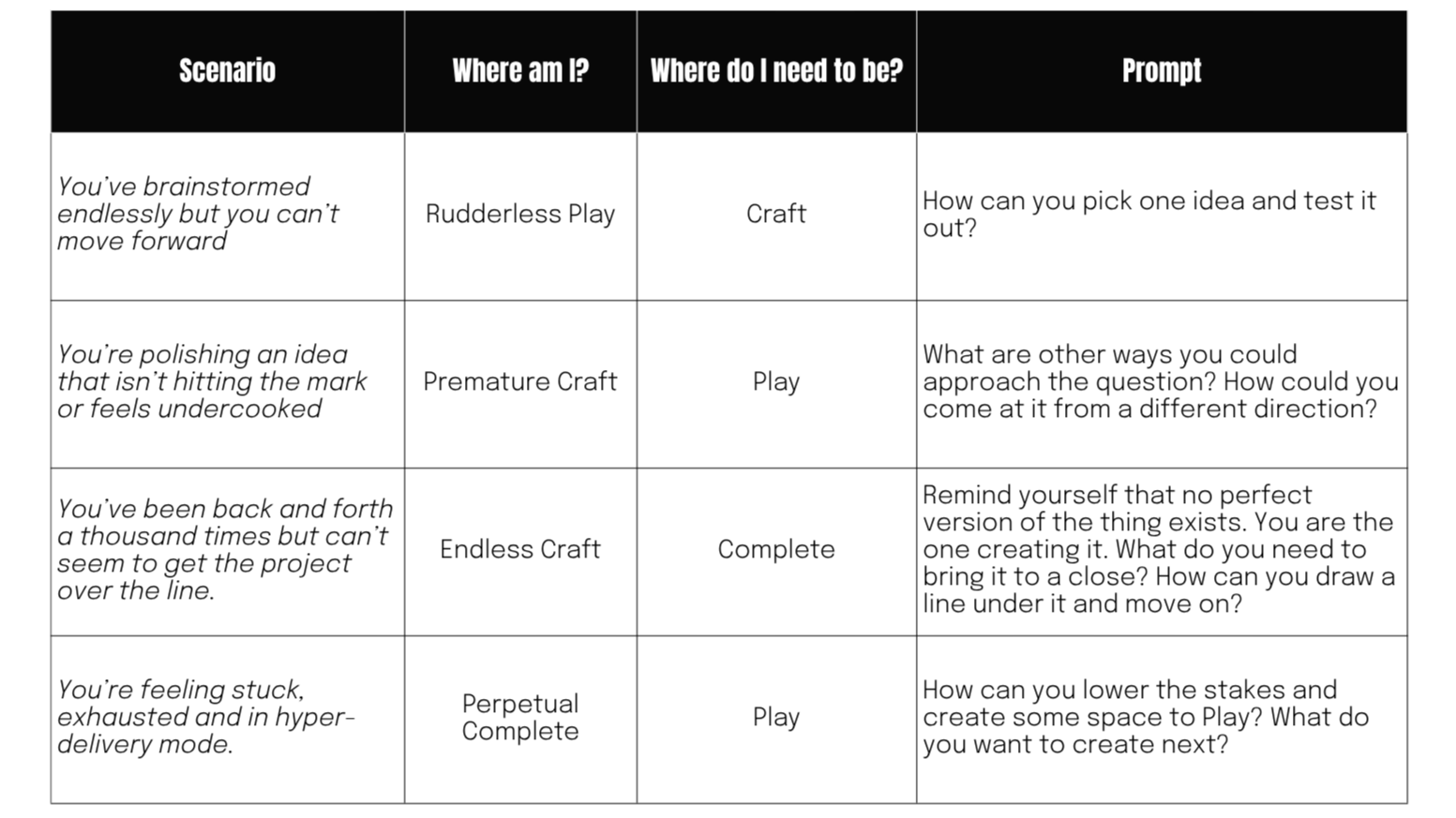
There are two guiding questions that help us work skilfully with the creative process: Where am I at in the creative process, and where do I need to be? The first is about orienting yourself — framing the task as a creative endeavour and turning your attention to process rather than outcome. The second is about navigating — getting unstuck and building momentum around your next step.
Here are some examples:
You’ve brainstormed endlessly but can’t move forward: you might be in rudderless Play, needing to move into Craft. How can you pick one idea and test it out?
You’re polishing an idea that isn’t hitting the mark or feels undercooked: you might be in premature Craft, needing to jump back into Play. What are other ways you could approach the question or task? How could you come at it from a different direction?
You’ve been back and forth a thousand times but can’t seem to get a project over the line: that’s endless Craft, needing to Complete. Remind yourself that no perfect version of the thing exists. You are the one creating it. What do you need to bring it to a close? How can you draw a line under it and move on?
You’re feeling stuck, exhausted and in hyper-delivery mode: you might be in perpetual Complete, and need some space to Play. How can you lower the stakes for yourself? What do you want to create next?
Do any of these scenarios sound familiar? Rest assured that they’re drawn from close, personal experience...
Your turn. Choose a current project or something you’re interested in bringing into being.
Where are you in the creative process right now, and how does it feel?
Are you where you need to be? And if not, where do you need to move and what will help?
One of the wonderful and difficult things about the creative process is that there are no rules — about how long to spend in each phase, how many times you’ll move back and forth between them, or where you’ll meet resistance. You are the one bringing the thing into being, and you get to decide.
This guide’s purpose is to help you work with your own intuition and judgement, so you can feel confident in the creative decisions you’re making at every stage.
But as a rule of thumb, I try to stay in each phase just a little longer, after I’ve decided that it’s definitely time to move on.
Download the pdf worksheet, which includes a summary roadmap you can use anytime you’re bringing something into being. Try it out on small creations, like your next sandwich, and on larger creations in your professional life. And notice what starts to shift as you treat more and more of your life as a creative endeavour.
How I use the creative process
Here’s an example of how I use the creative process in my work life.
Say I need to speak off-the-cuff. Like responding to a question or thanking a presenter at a conference. I may only have a minute to prepare and I use Play <> Craft > Complete to do it:
First, I lower the stakes and jump into Play for a few moments — asking myself: what are all the things I’m noticing / feeling / thinking about right now?
Then I move into Craft. Of all those ideas, what are three that would be helpful to share with my audience, and how can I structure them?
I jump back into Play to check for any other stories or thoughts that would complement that structure.
When it’s time to Complete, I tell myself that there is no perfect version of this speech. I trust that what I’m sharing is true and intentional. And I remind myself to have fun.
Then I deliver the talk.
Play. Craft. Complete. All in under a minute.